Shared design foundation
Tesoura and Pro Line were two separate efforts — one for the home kitchen, one for commercial use — but they needed to look and feel like they belonged to the same family. Both share three core design moves:
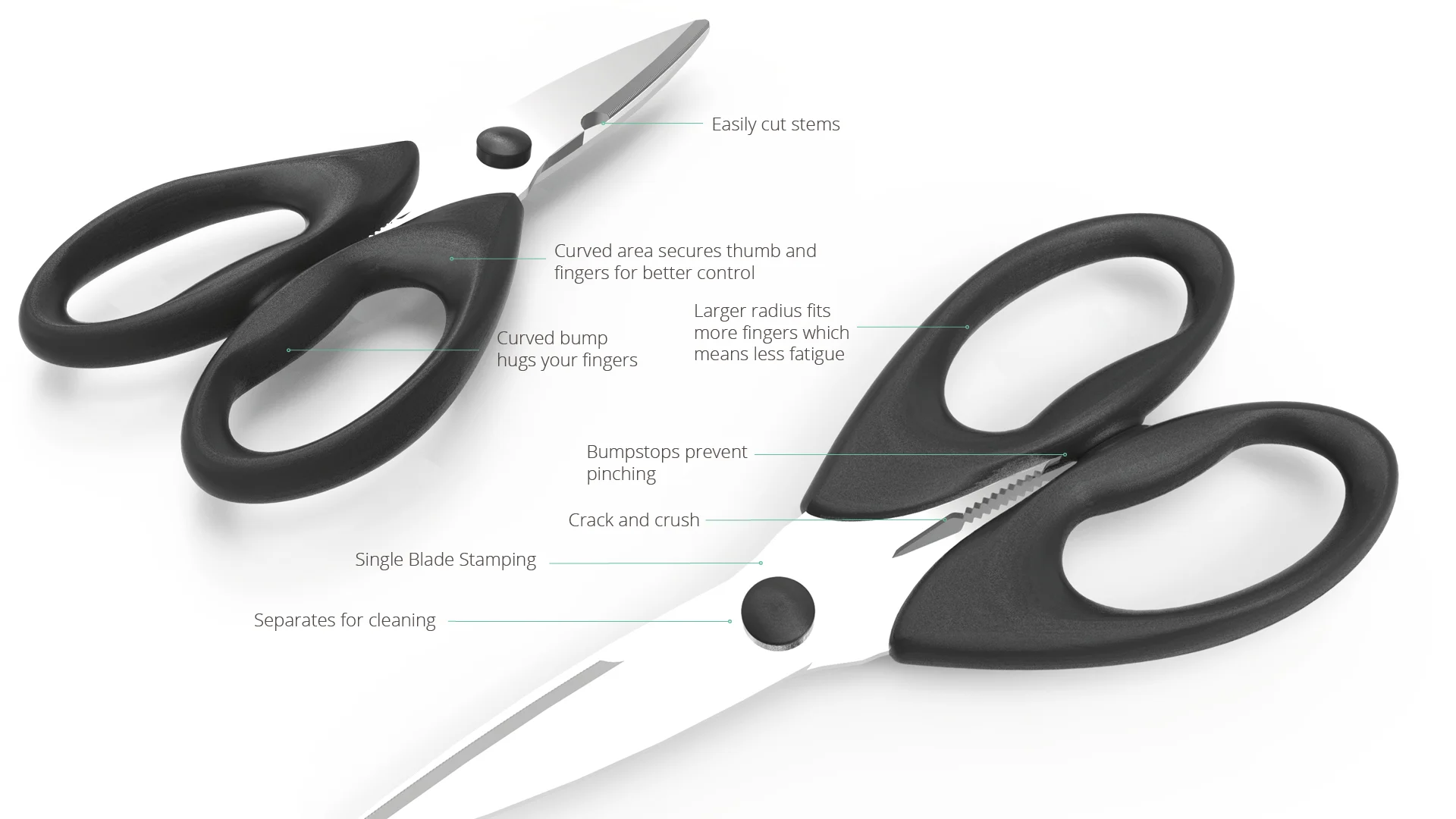
- Bump rest — a consistent bump pattern provides tactile feedback and brand recognition across both products.
- Carved thumb rest — a sculpted indentation on the handle creates a natural resting point for the thumb, improving control and comfort.
- Single-material overmold — both are molded as one piece, eliminating seams, improving durability, and simplifying cleaning, critical in kitchen environments.
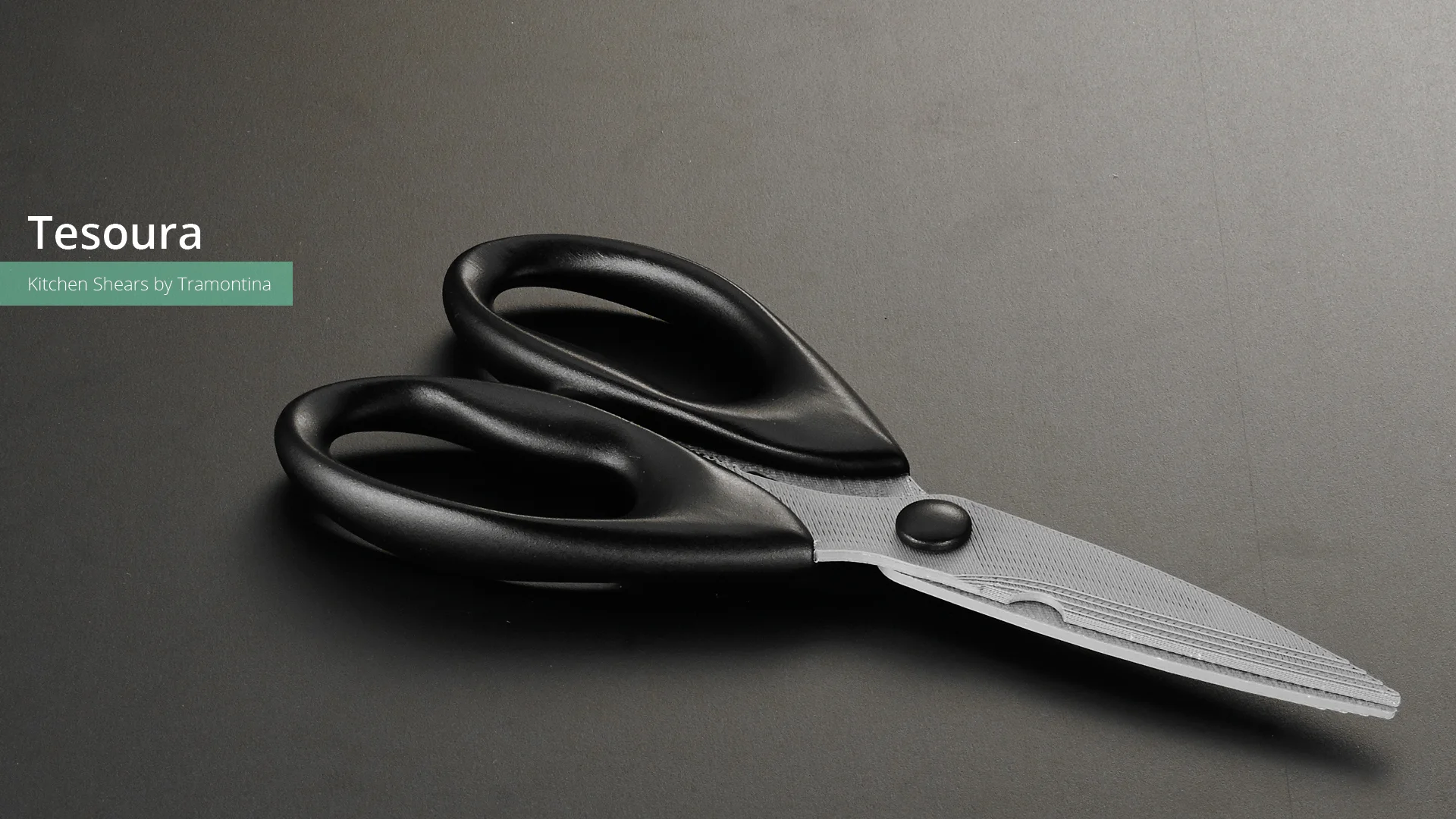
Tesoura — for home kitchens
Challenge & insight
Tesoura was an effort to create a new design for home kitchen use that would stand out from the competition: a design that was both ergonomic and aesthetically pleasing, not just another pair of shears on the shelf.
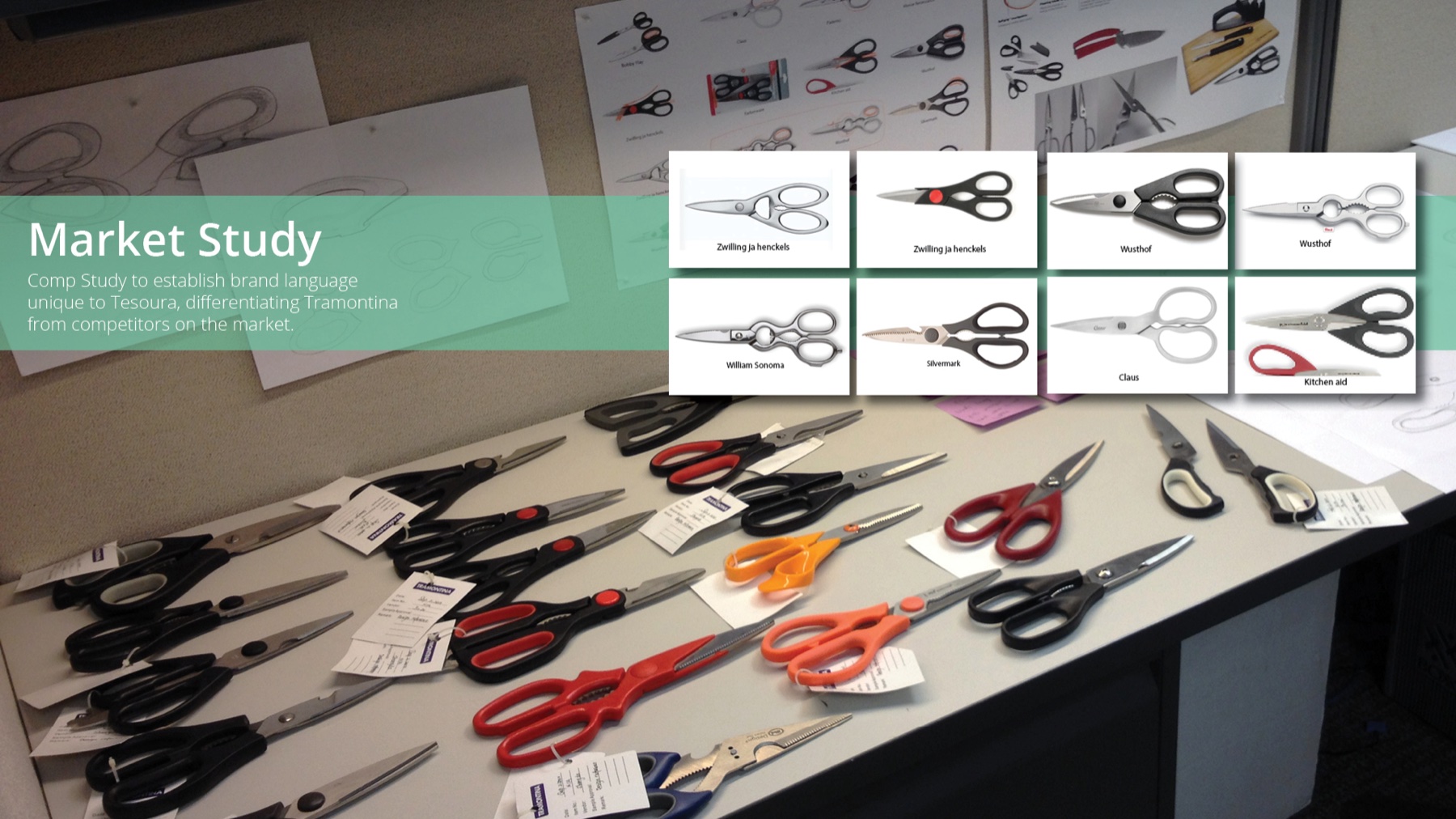
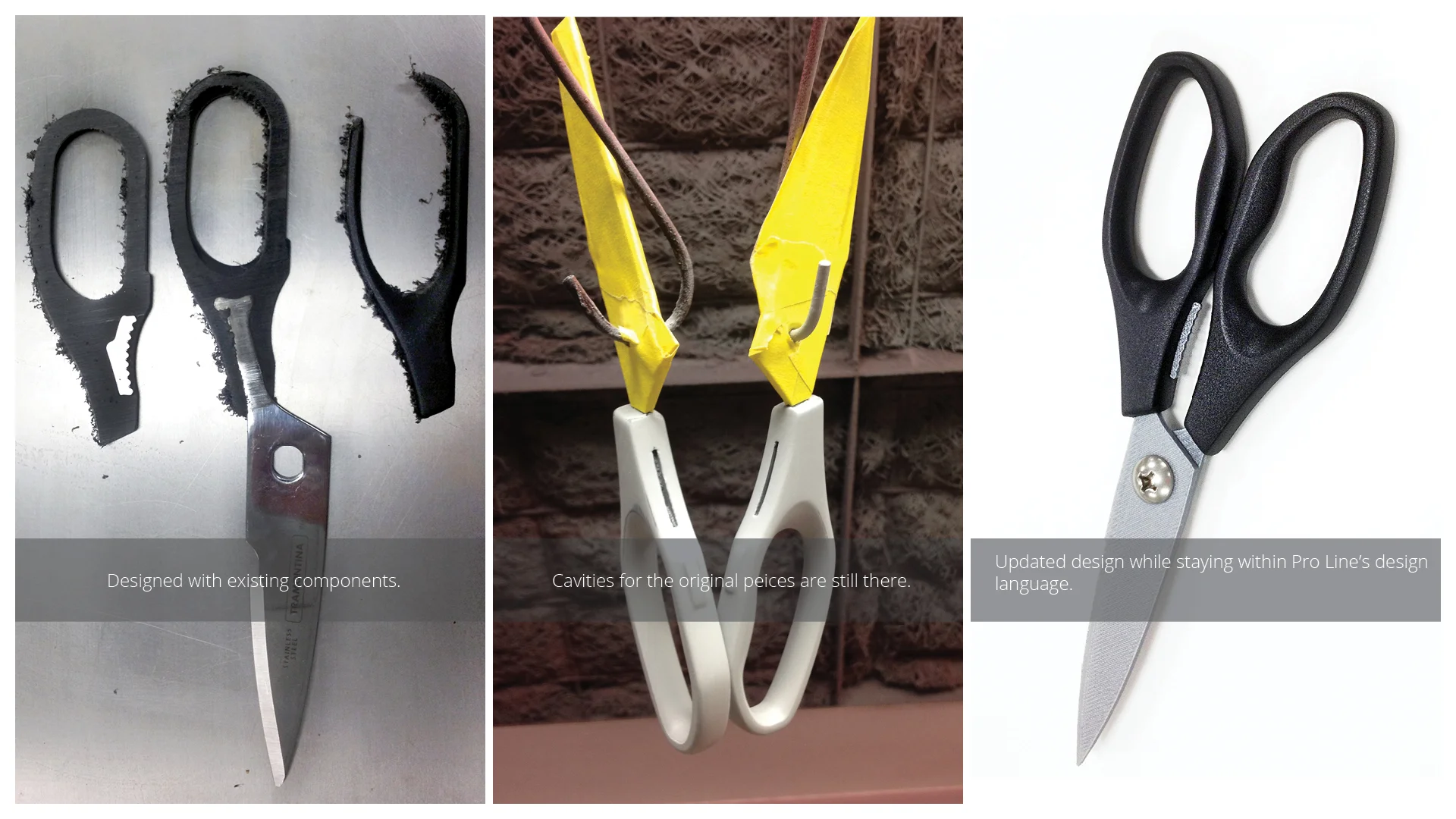
I analyzed what was already in the market and broke down the design language of the competition to find a unique aesthetic for a new kitchen shear. The design needed to sit comfortably in the hand even while cooking, when your hands tend to get wet or greasy — so the shape and texture had to stay functional, keeping a strong grip and control. Constraint for the design: the hardware had to stay the same, so only the handles could be redesigned.
Design development
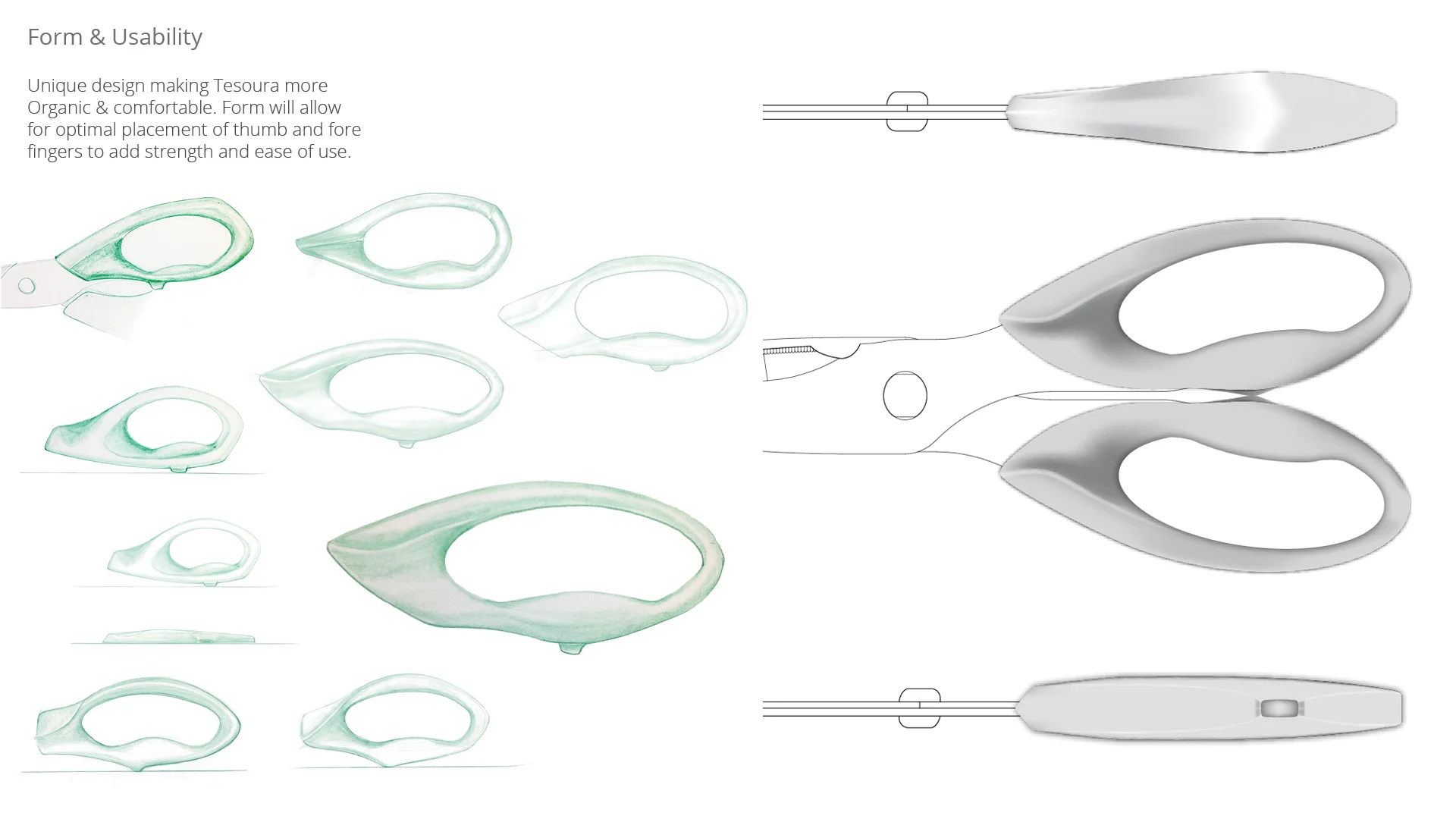
Starting with sketches, I explored form variations — blade angles, handle curves, grip points — aiming for a shape that felt modern yet functional. Handle shape, texture, and ease of use were the focus.
Ergonomic refinement
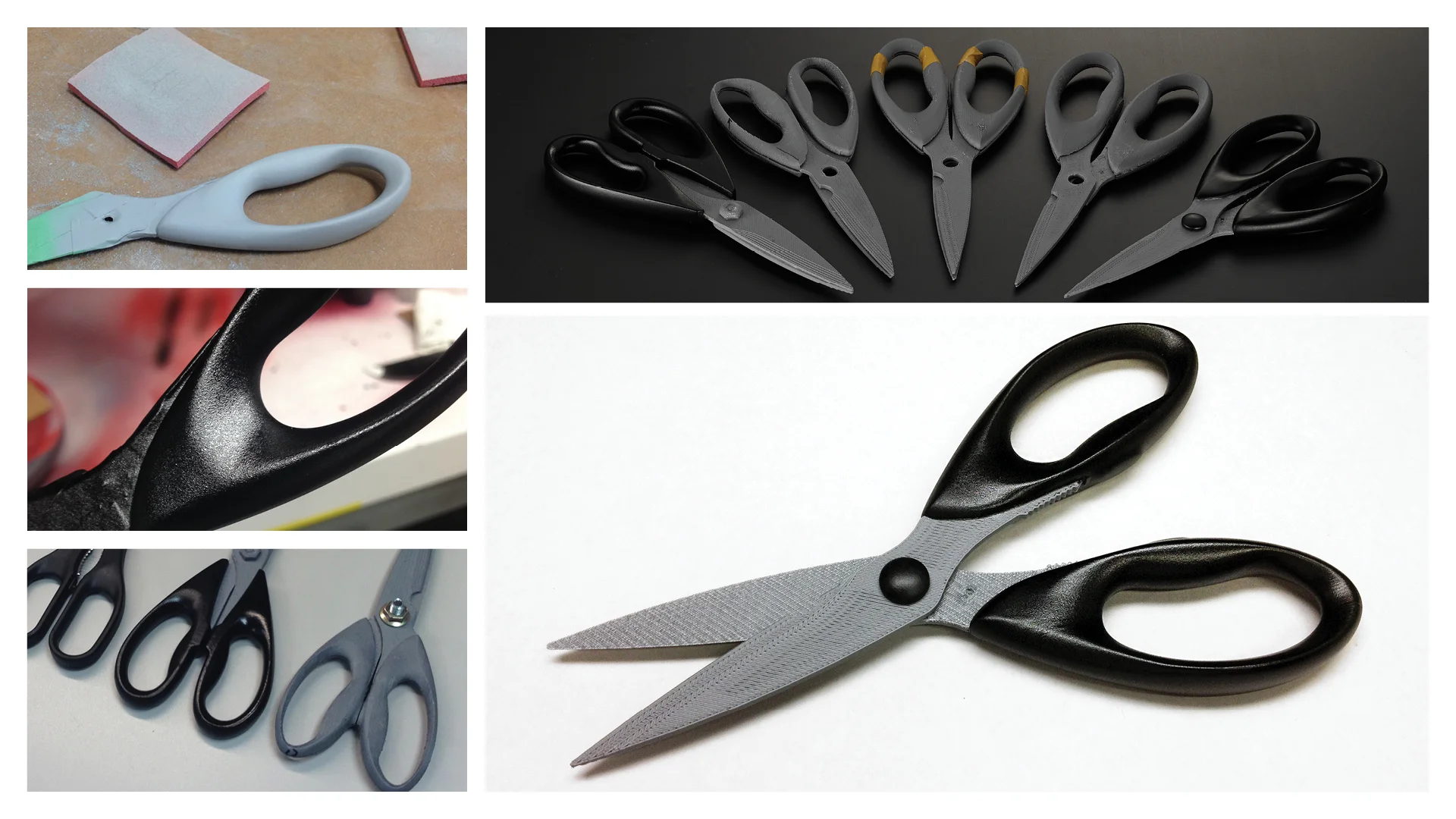
Prototypes were tested in real conditions: cutting herbs, trimming poultry, breaking down seafood. The texture needed to grip without feeling abrasive. The blade geometry needed to feel balanced in the hand. The handle curves needed to work across different hand sizes.
Through iteration, the design converged on a form that felt right: organic without being decorative, textured for function rather than ornament, and comfortable in both resting and active grips.
Pro Line — for professional kitchens
Challenge & context
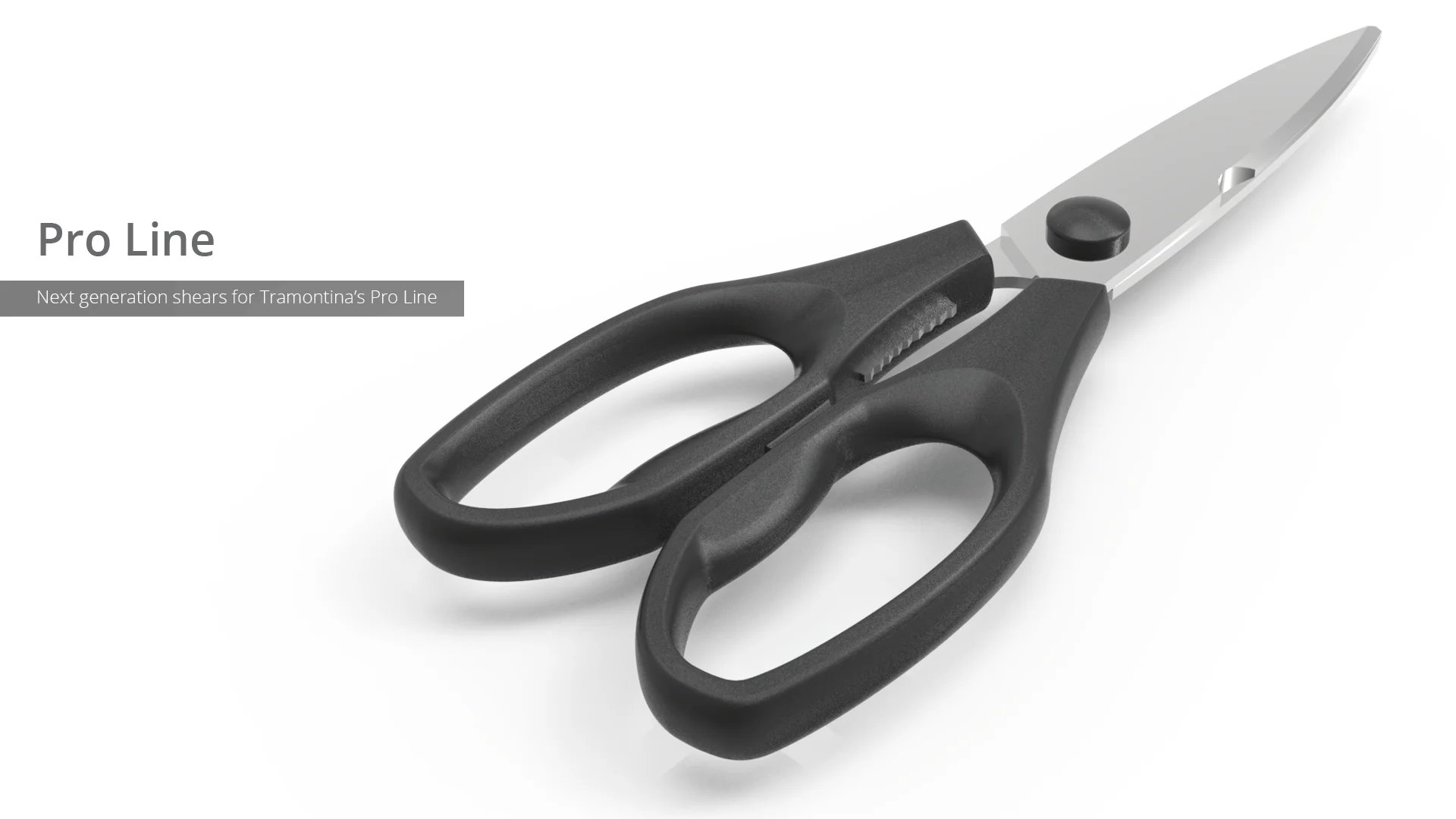
Pro Line was a refresh of the existing Pro Line shears, marketed toward serious chefs and commercial kitchens. The same aesthetic and design-language challenges from Tesoura applied here, with two additions: making sure there was enough space to use comfortably with gloved hands, and building in the durability to hold up to repeated, all-day use in a commercial kitchen.
Design development
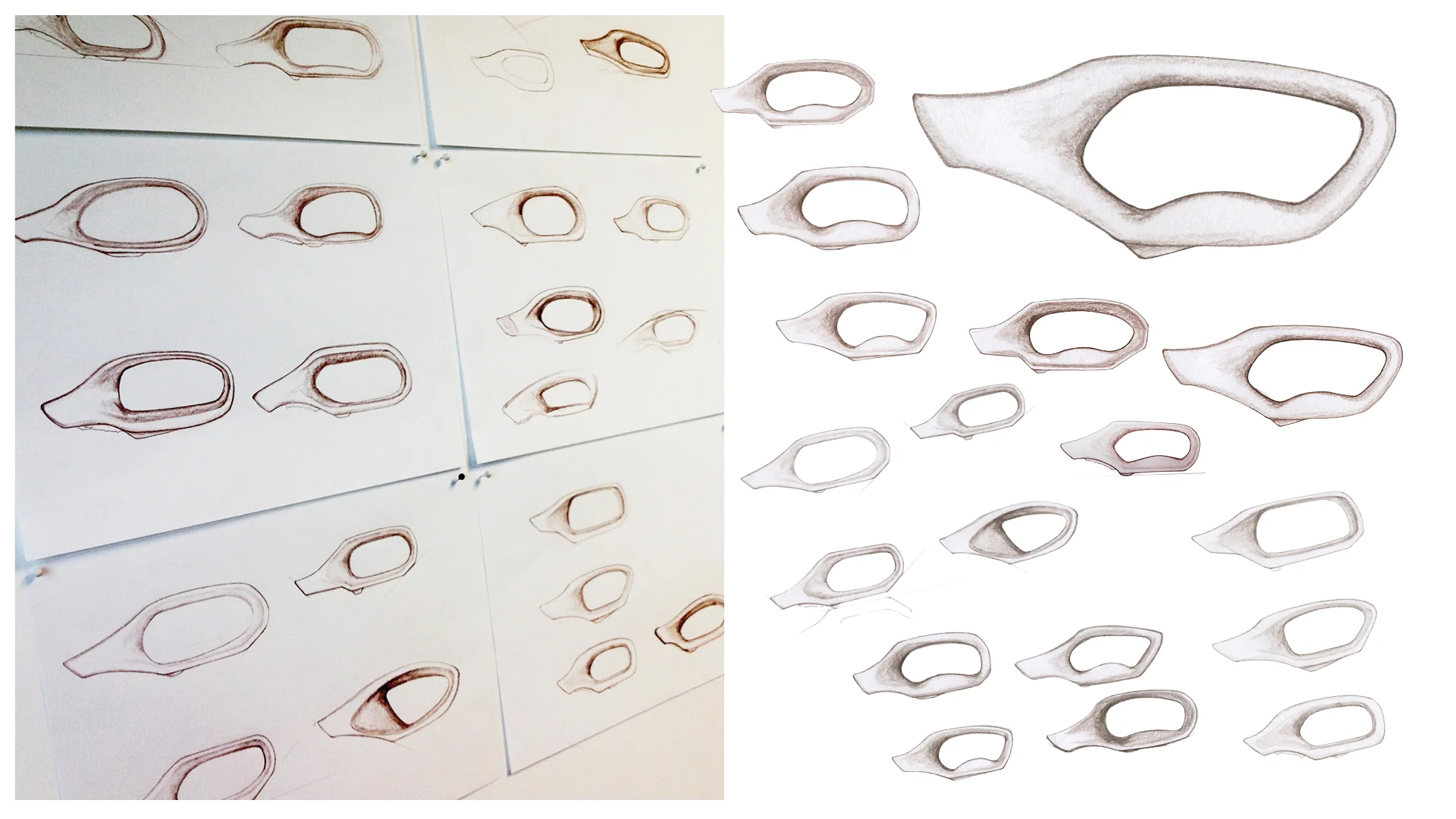
The same texture treatment from Tesoura was carried over here, adapted for gloved hands and a more commercial look. Sketches explored proportions, finger holes, and blade profiles, aiming for a shear that felt lighter and more agile than the original while keeping the strength needed for high-volume use.
Commercial durability
The same overmold strategy that benefits home cooks matters even more here: one material, no seams, easier to clean, more durable. Prototypes were tested against the demands of professional kitchens.
The result performs under real commercial conditions: balanced, durable, and carrying the texture and thumb rest of the broader product family.
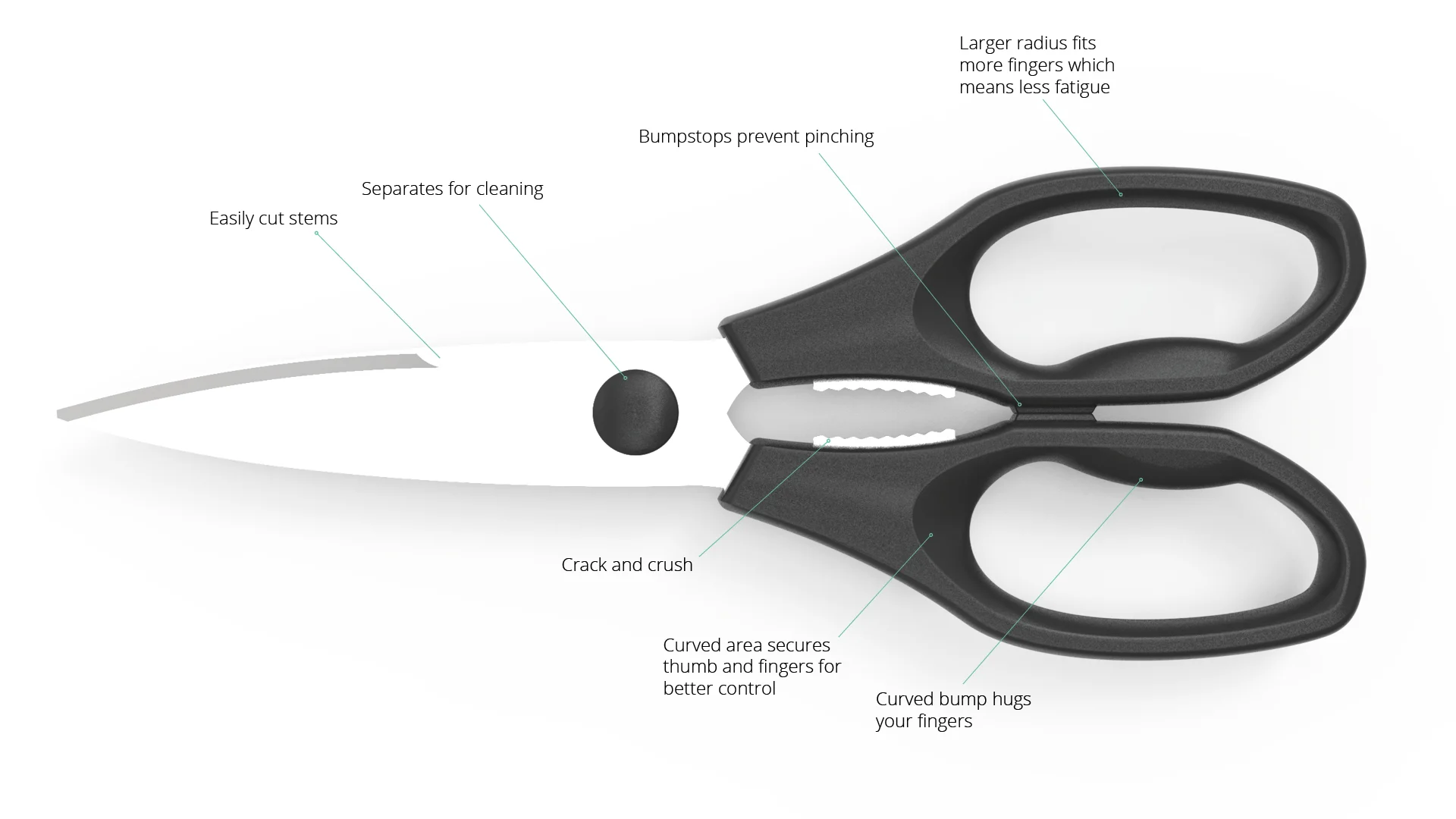
Design language as family tie
To tie them together as a recognizable Tramontina product, Tesoura and Pro Line share the same texture and bump pattern, along with the carved-out space for the thumb to rest on. Both are also overmolded in one material, which minimizes seams and keeps them durable and easy to clean.