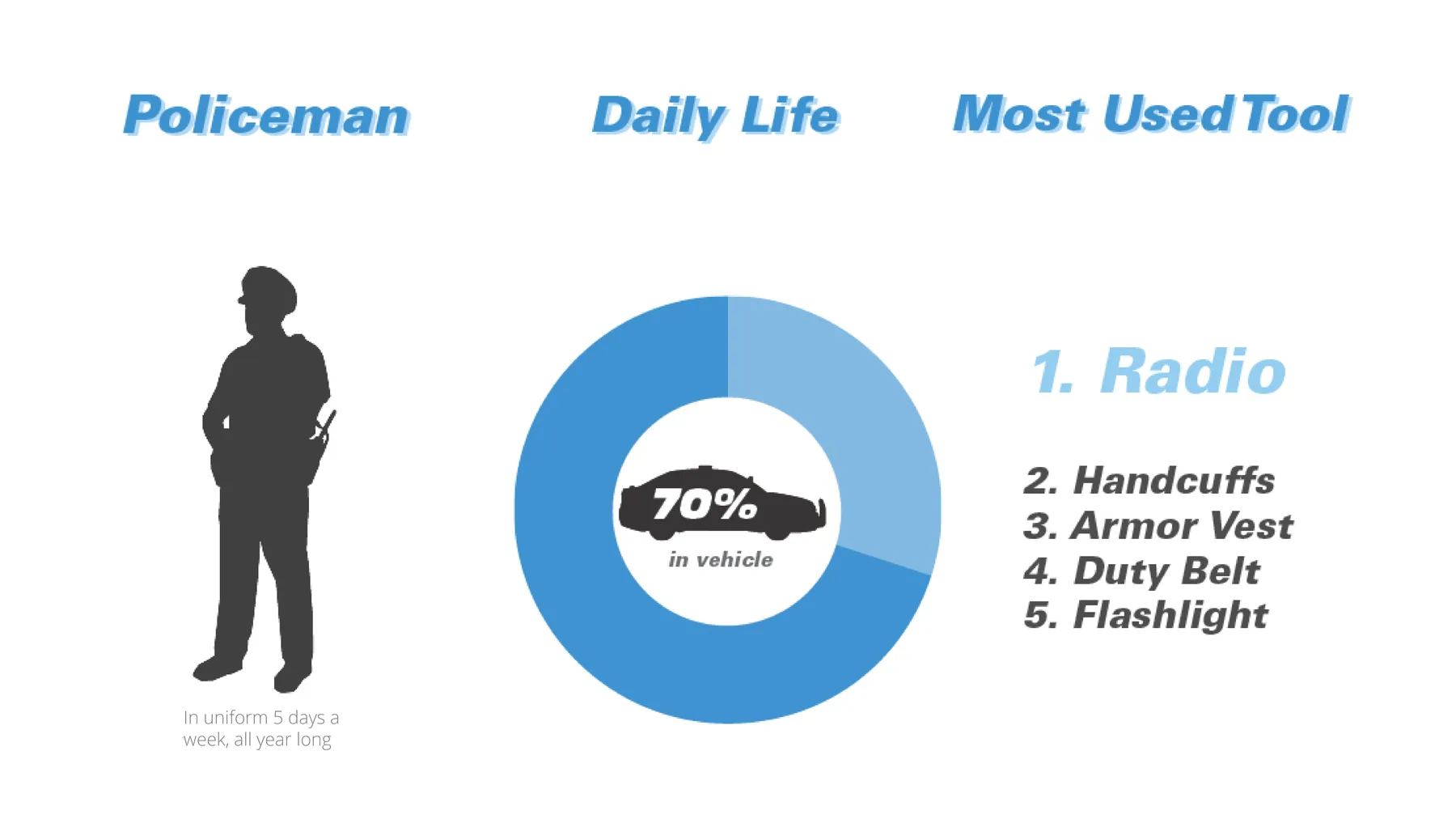
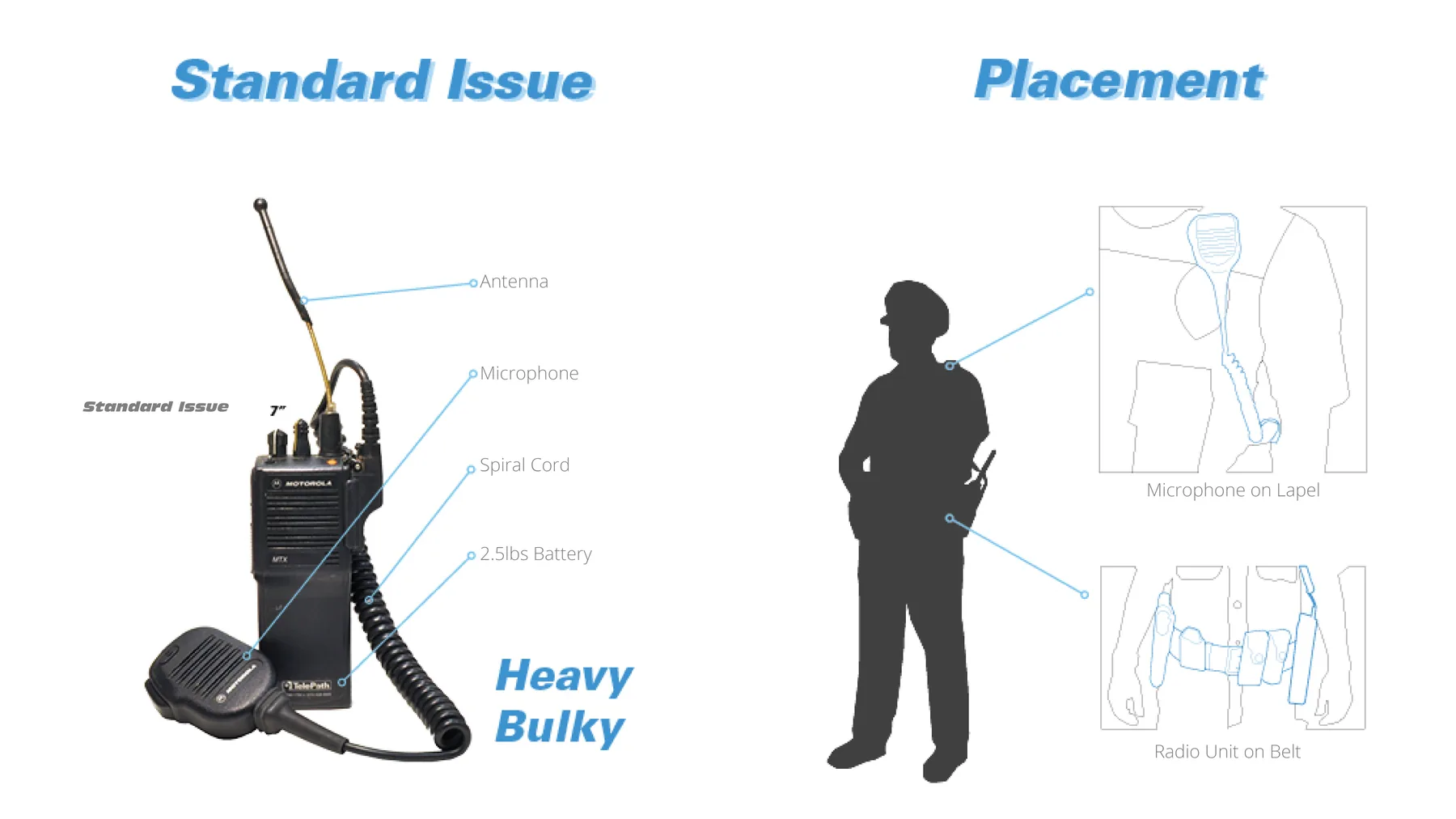
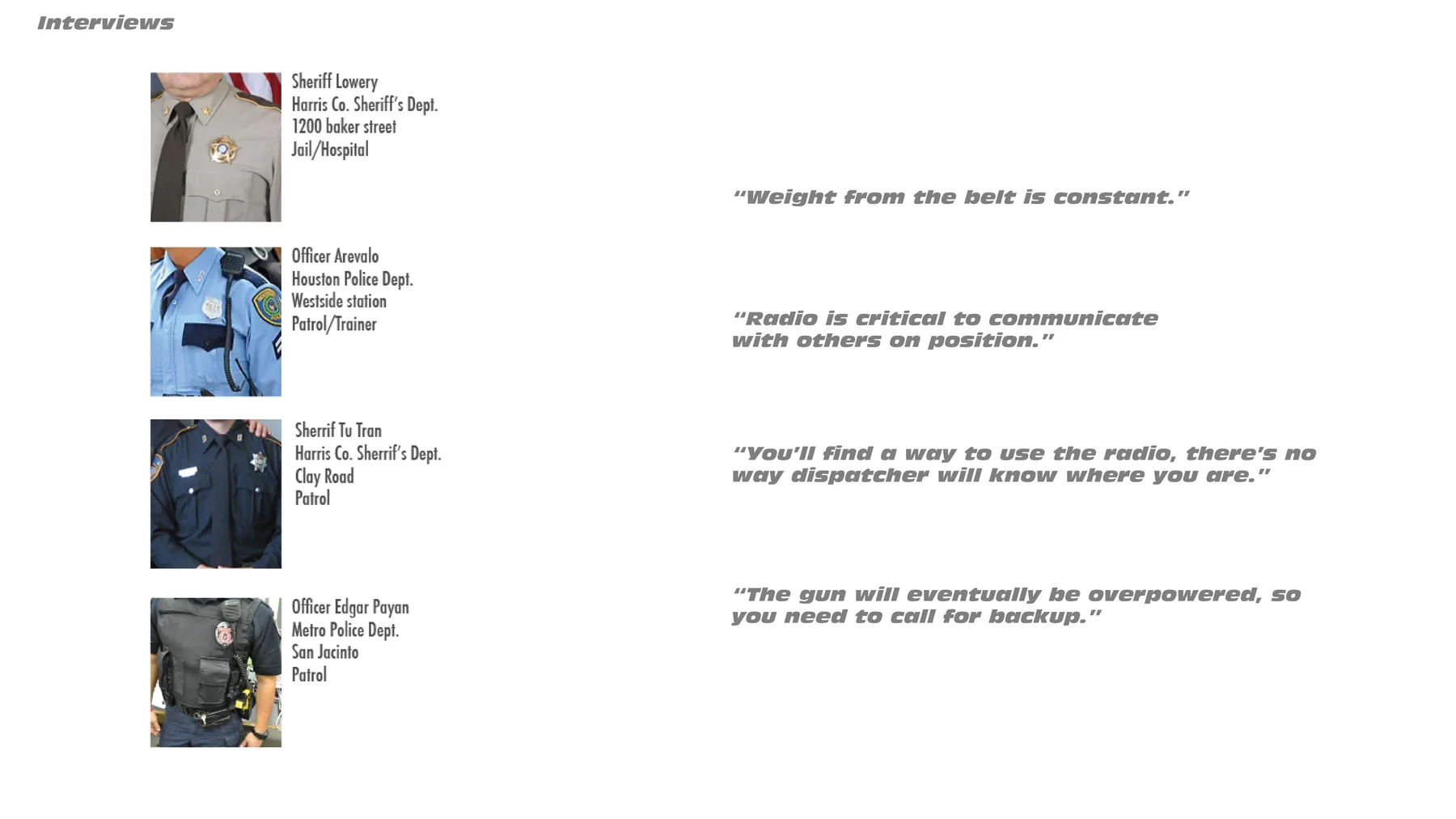
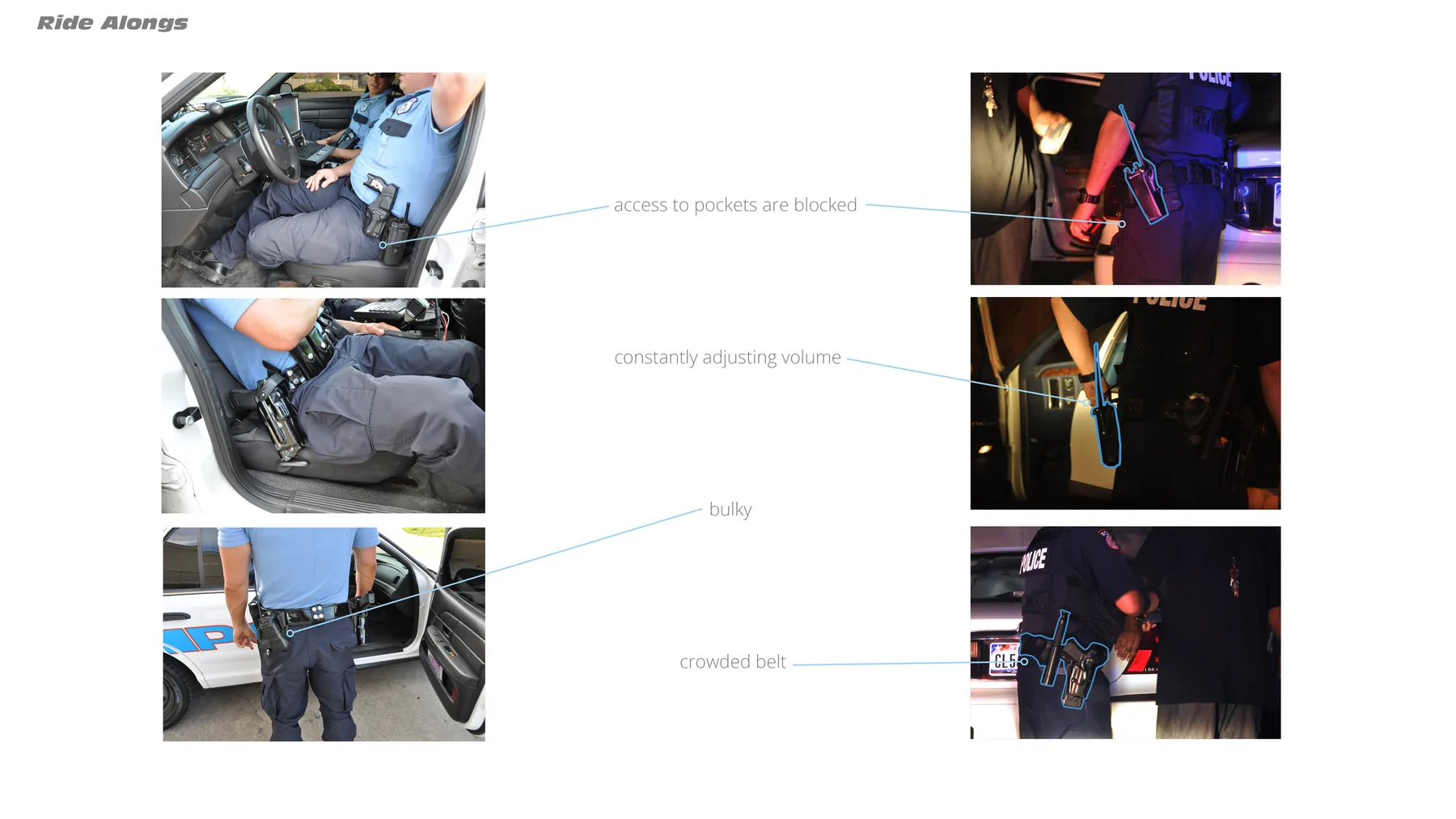
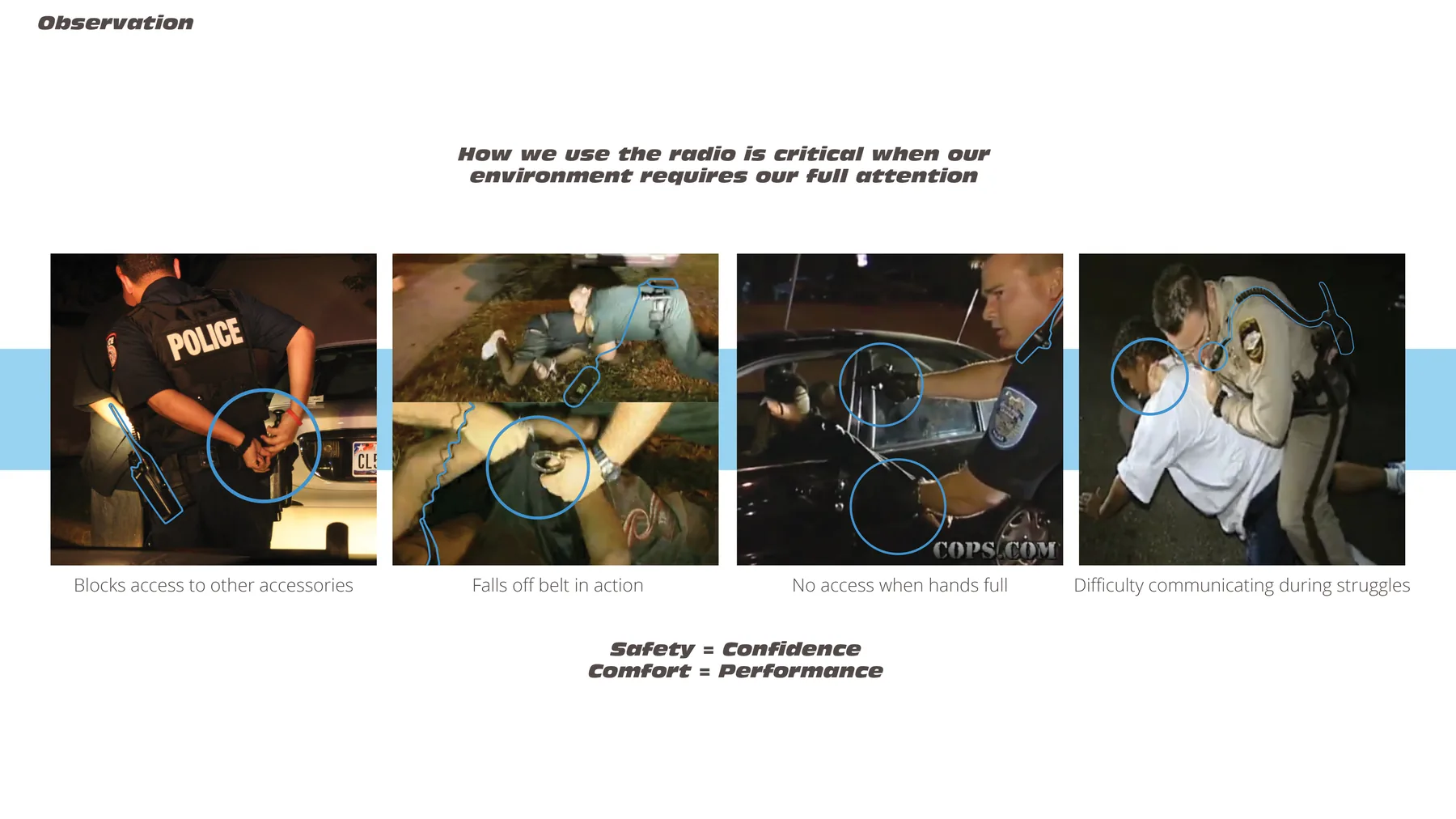
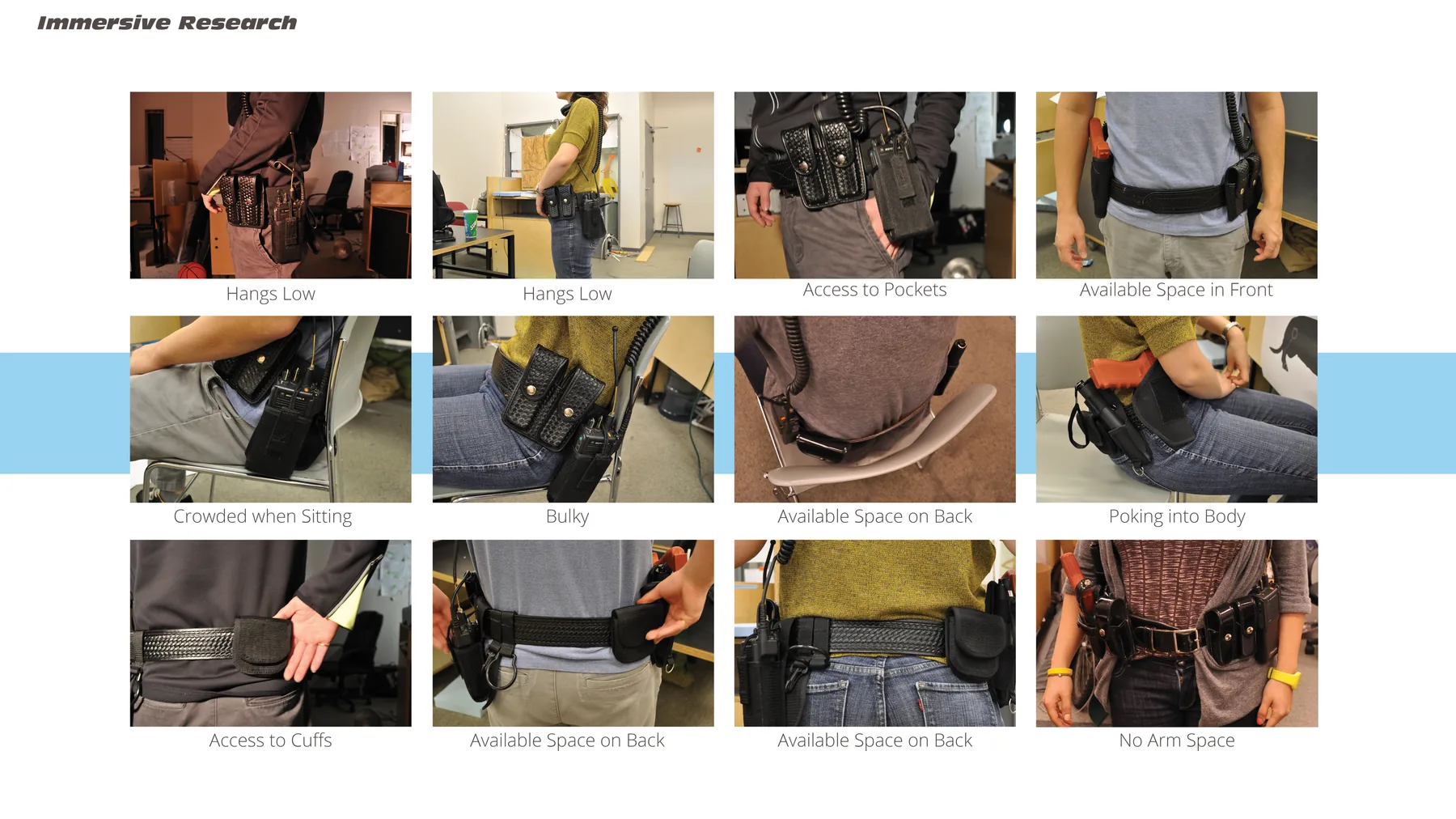
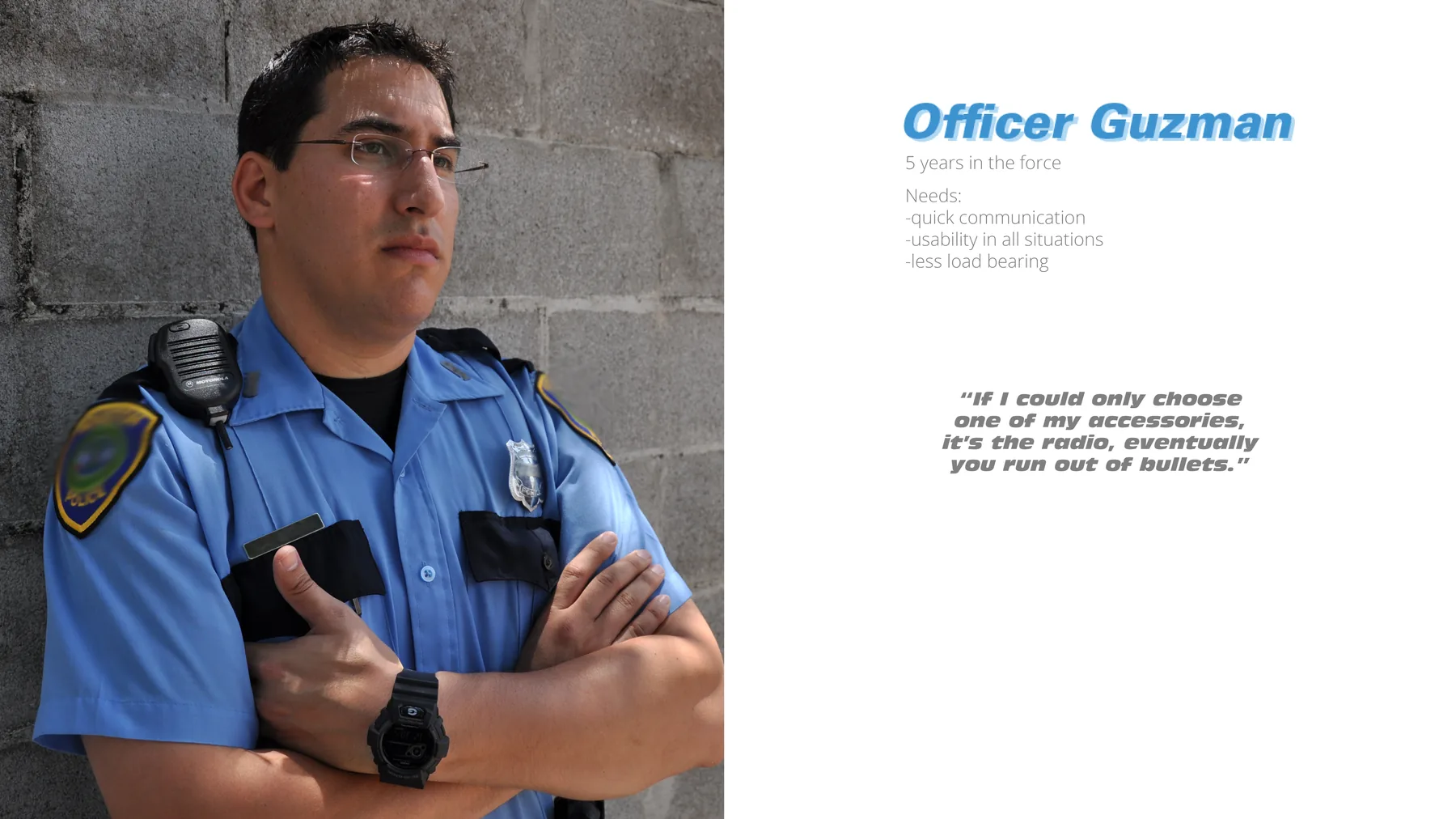
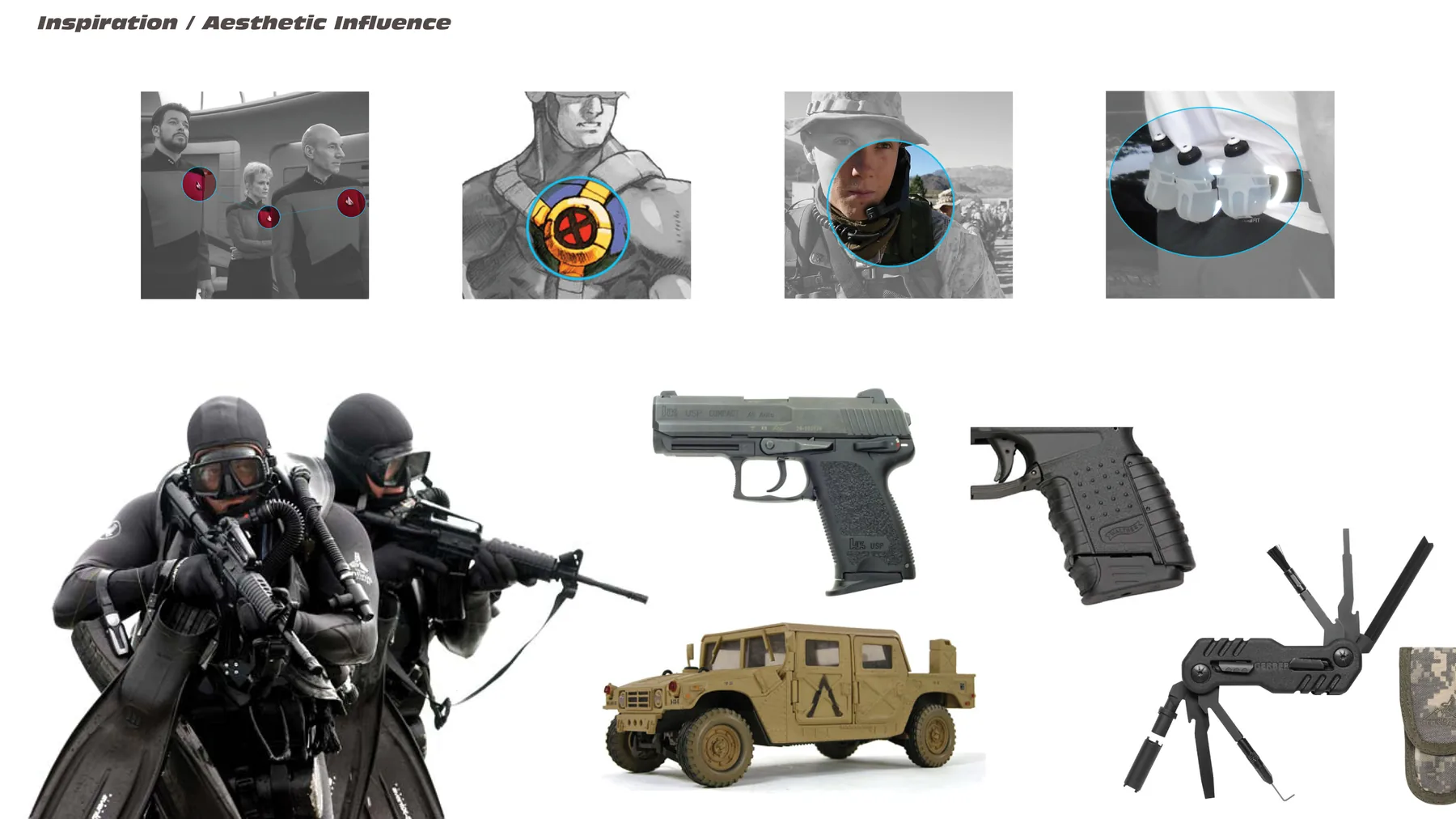
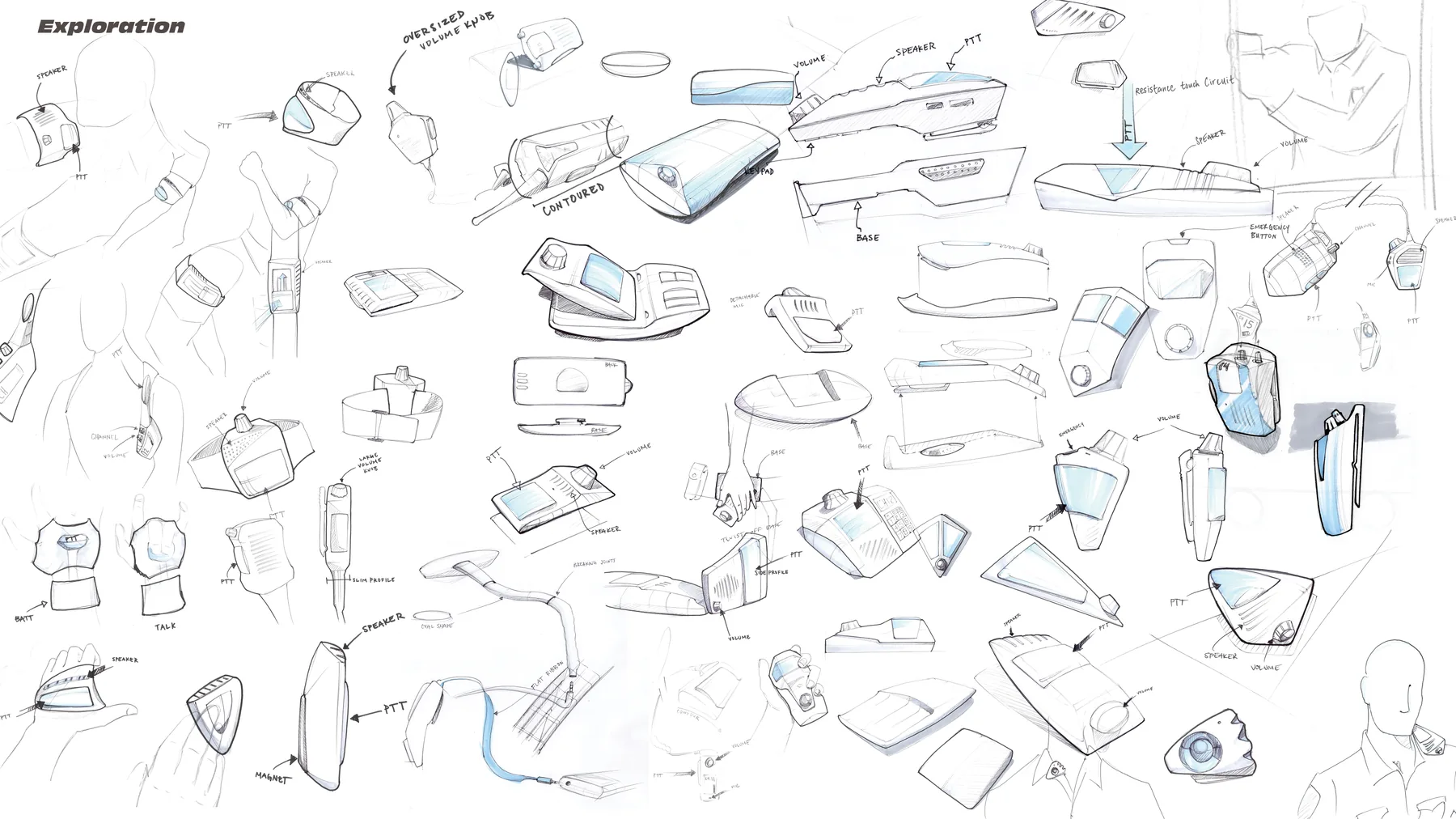
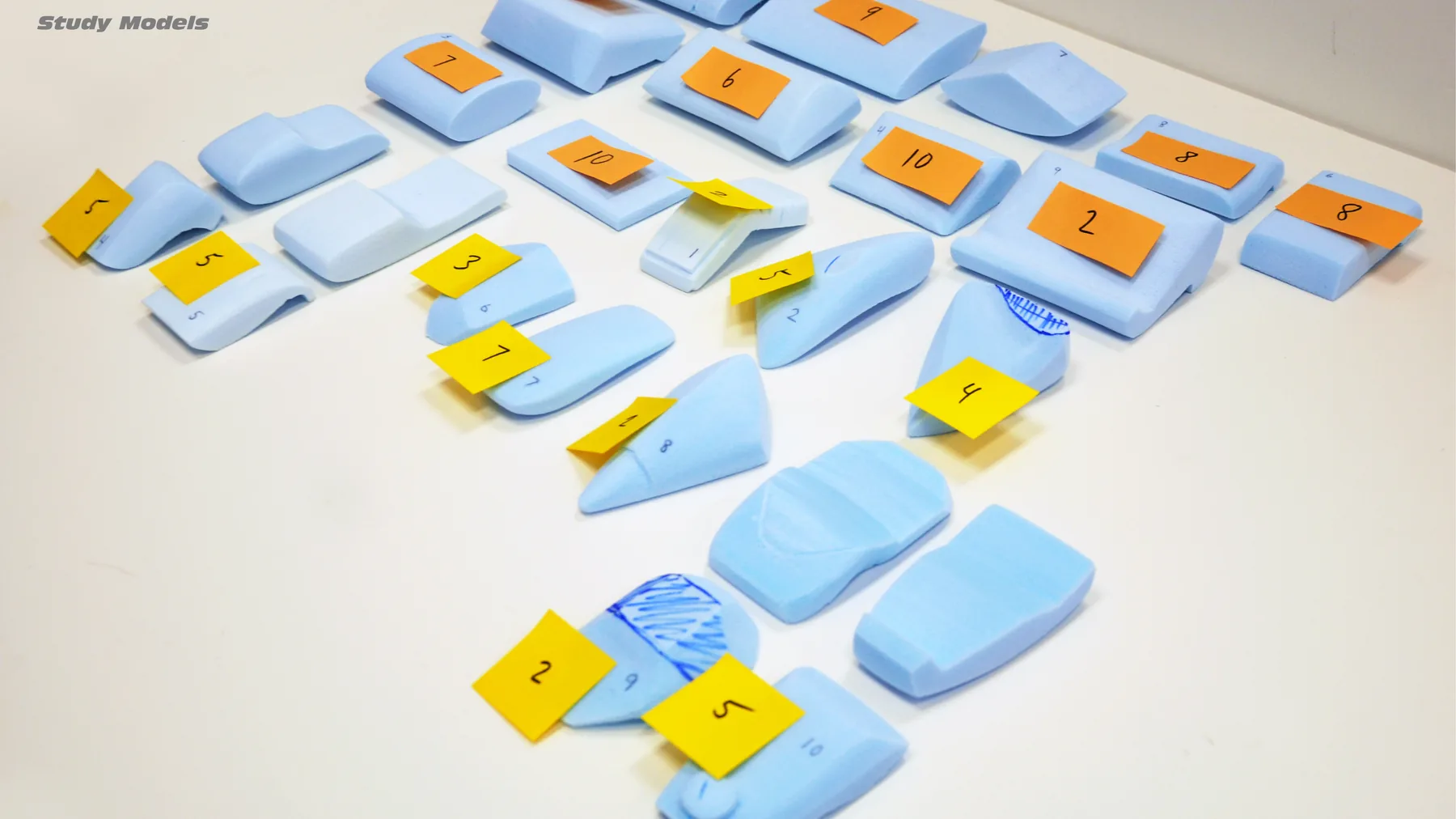
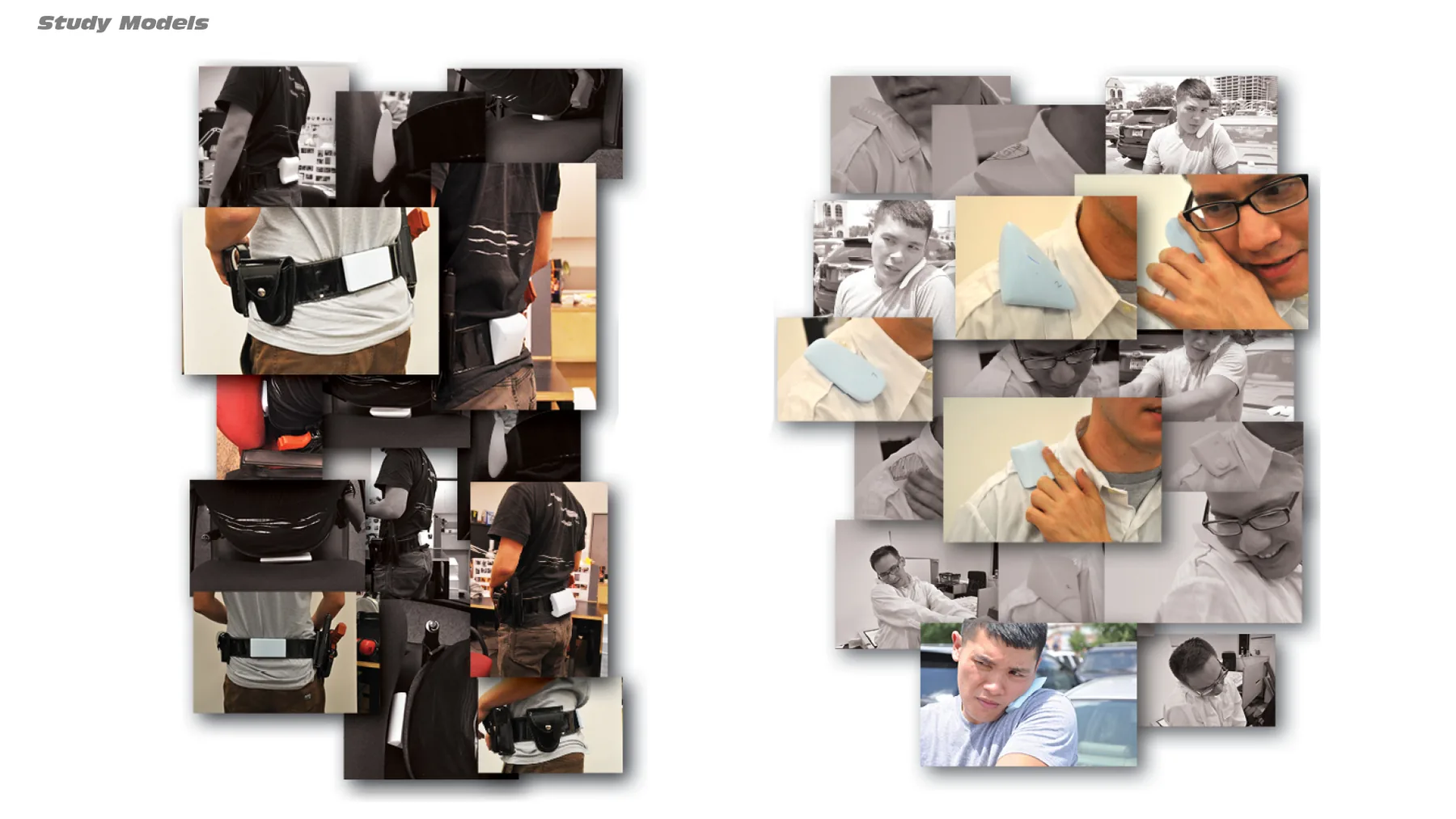
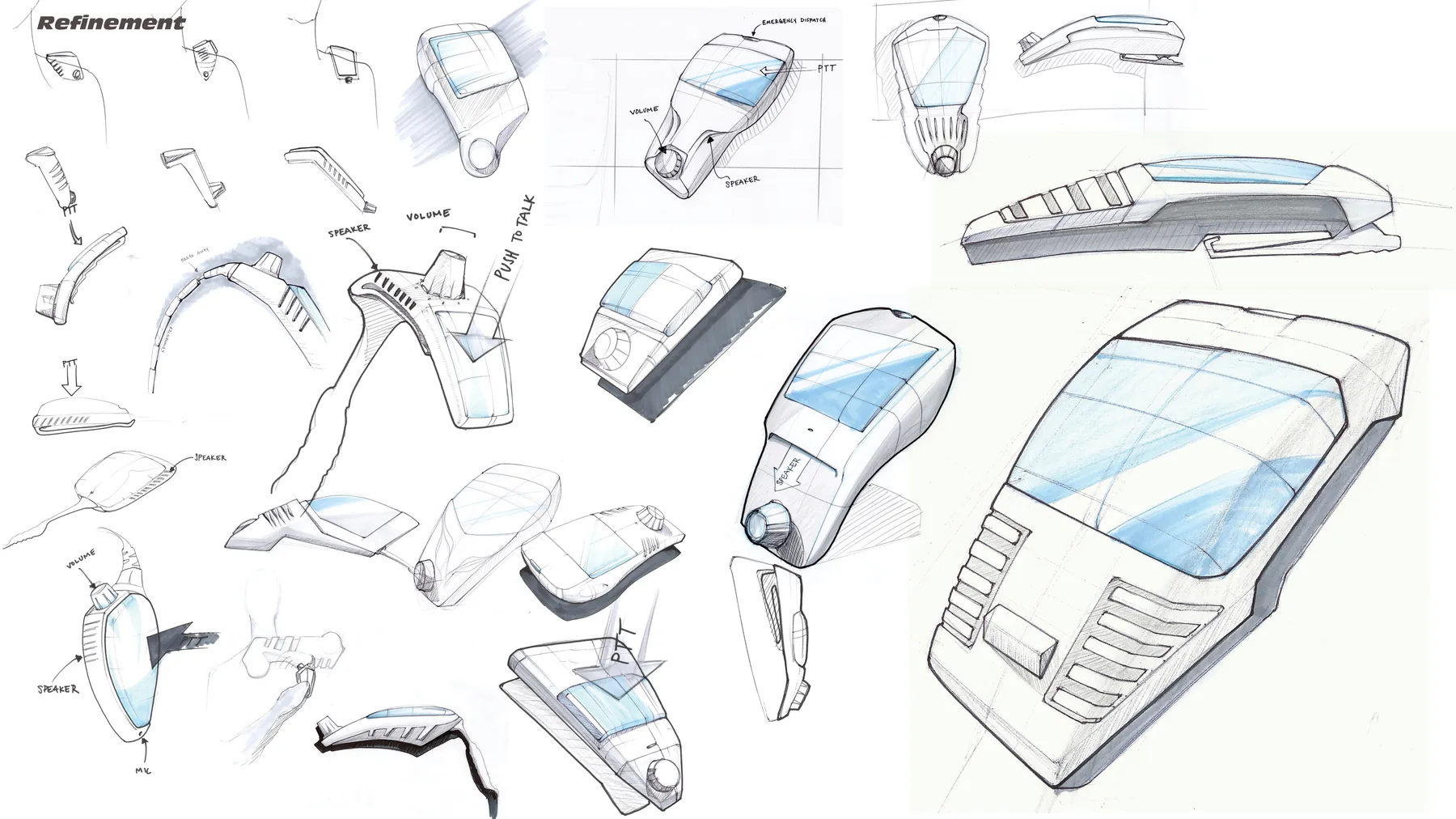
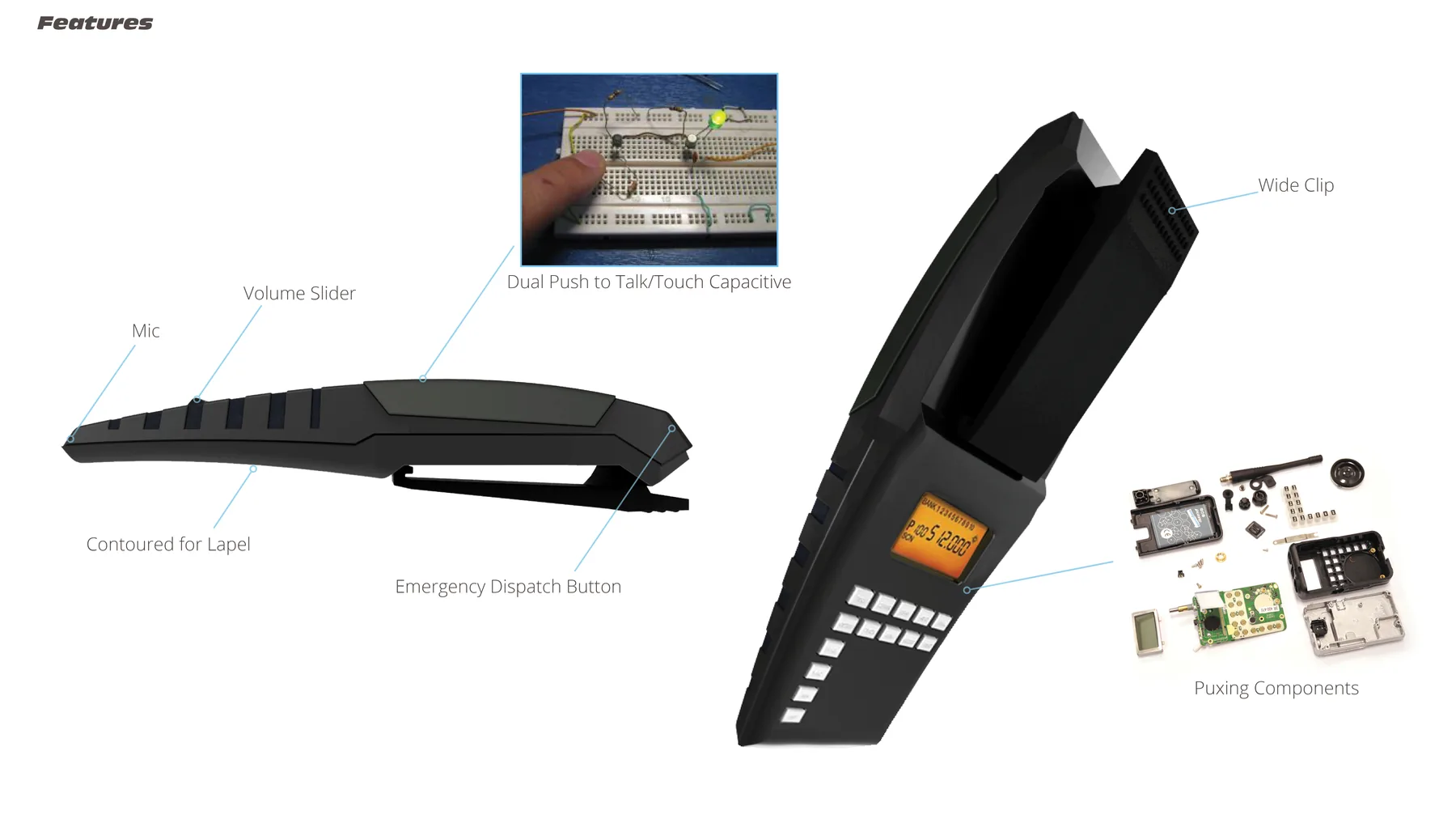
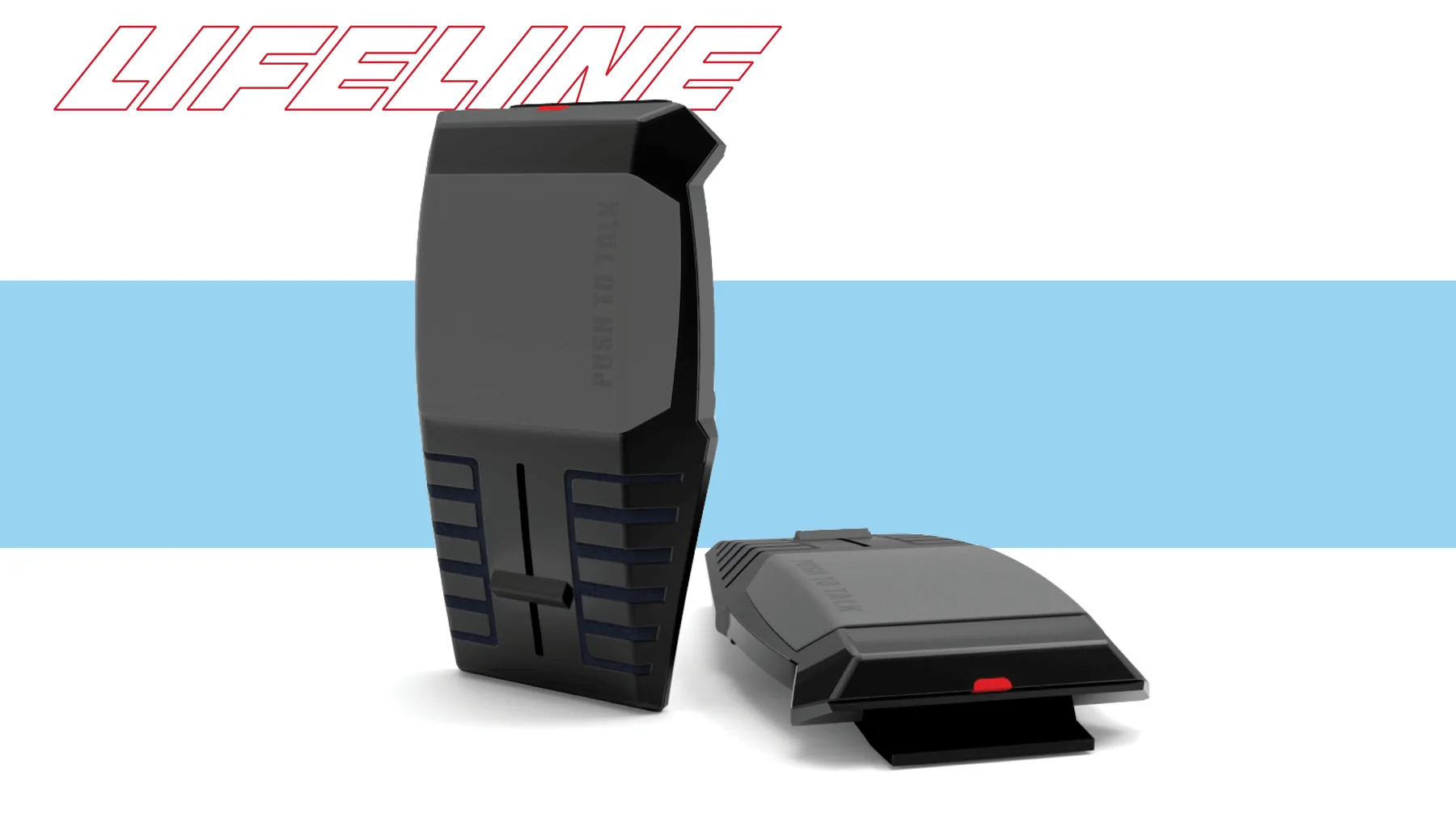
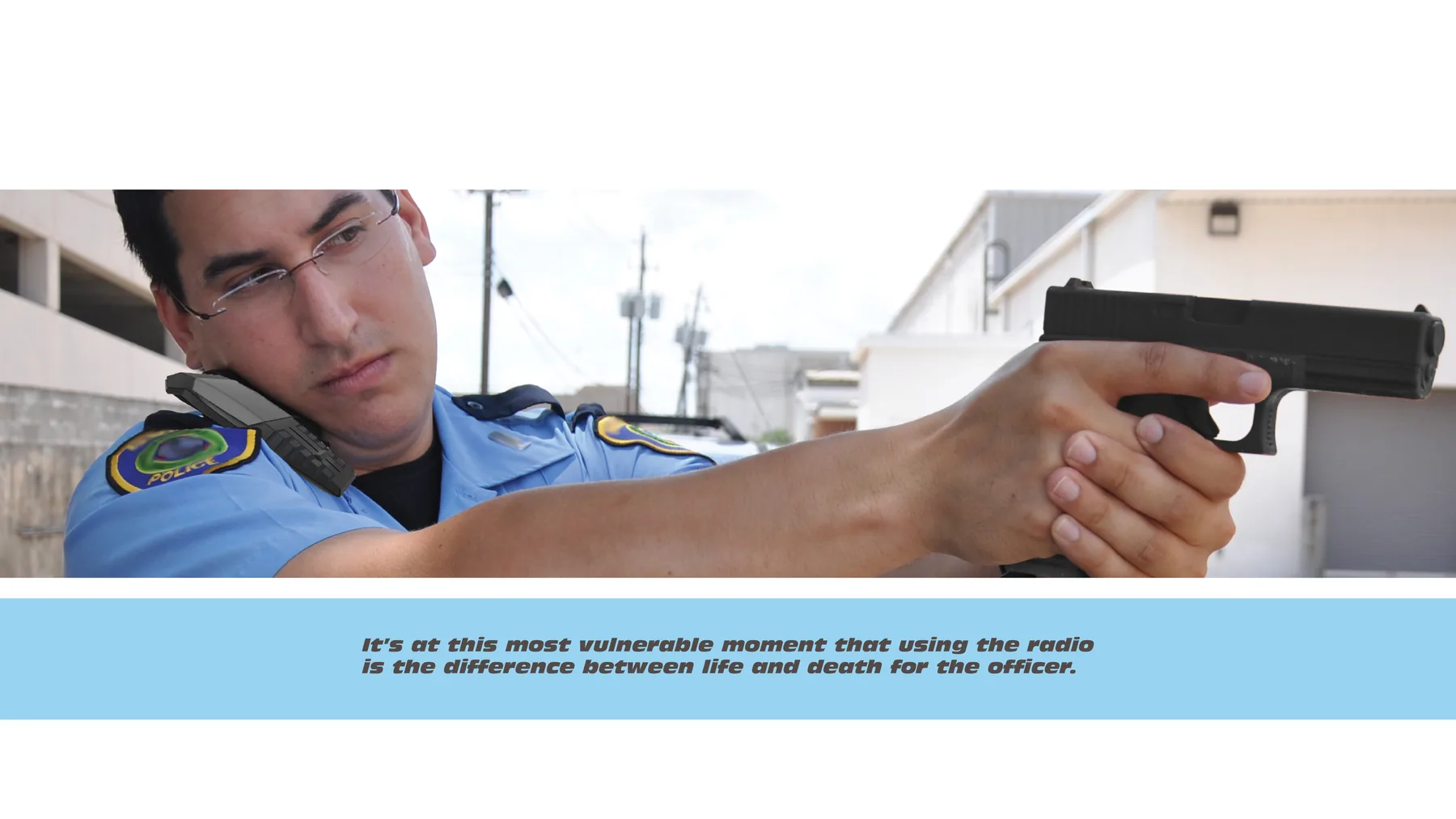
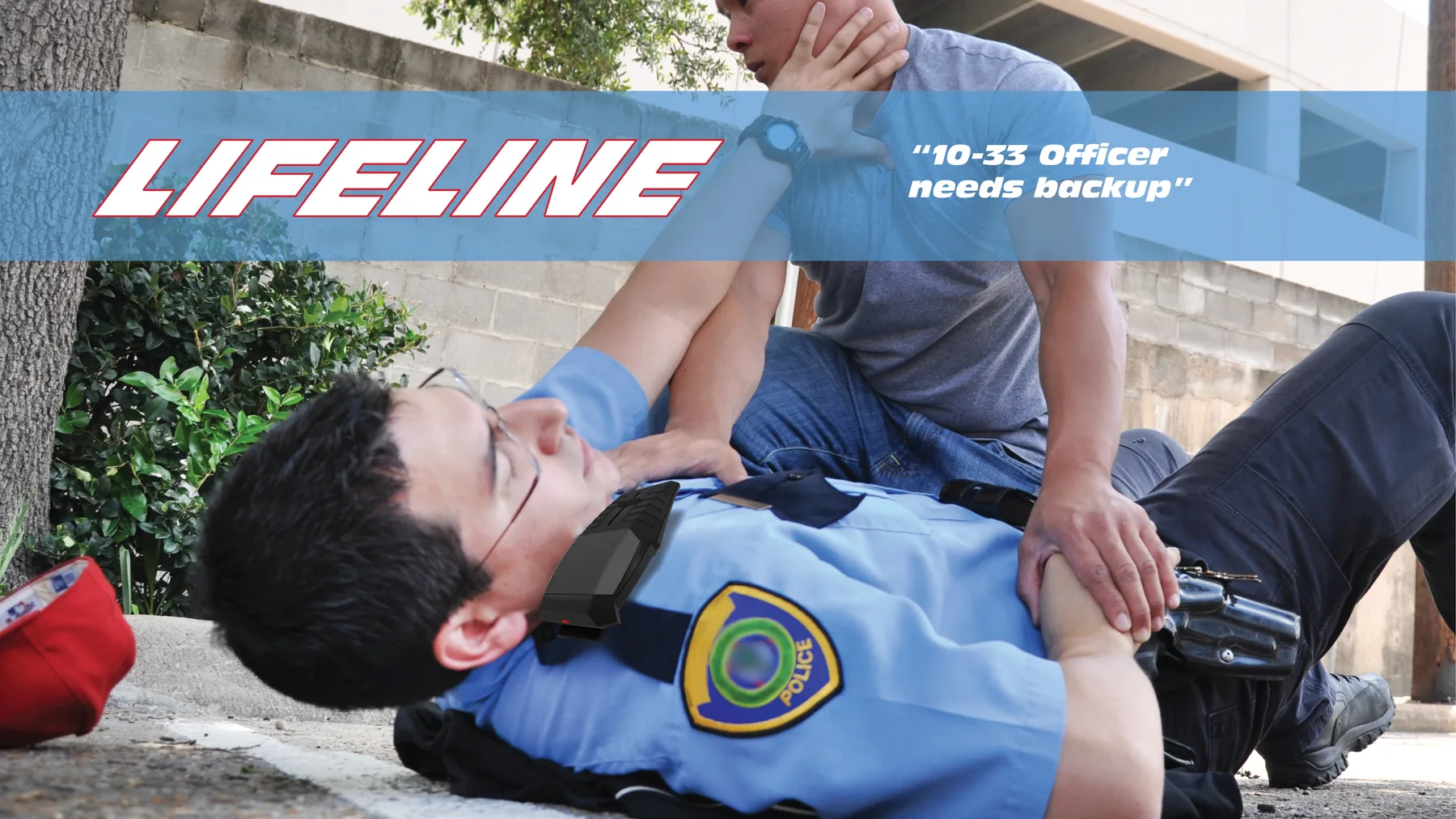
Where the research started: a patrol officer's shift runs eight to twelve hours, up to 70% of it inside the vehicle, and the radio is the most used tool on the belt — ranked ahead of handcuffs, vest, duty belt and flashlight.The standard-issue radio is seven inches, heavy, and bulky. Its placement is taught in the police academy, and it occupies the best position on the belt — pushing tools like the handcuffs toward the back, where they are hard to reach during an arrest.One-on-one interviews across departments: police, constables, state troopers, sheriffs. Asked to pick the one item they could not part with, every officer chose the radio. “Eventually you will run out of bullets and without a way to communicate to dispatch no one will ever know you're in danger.” — Sheriff TranRide-alongs with the Houston and Metro police departments. The radio was in constant use — position called in at every stop — and constantly in the way: it blocks pockets, falls off during running and climbing, and the volume is readjusted every time the officer gets in or out of the car.Observation showed the radio being used at exactly the moments the environment demands full attention. This produced the working principle of the project: safety equals confidence, comfort equals performance.I bought a duty belt and the standard equipment and wore the full rig for two weeks — running, driving, sitting, jumping fences, and simulating arrests — to map where the weight, poking, and blocked access actually occur. The belt was also tested on a female subject to compare body types.The persona built from the interviews and ride-alongs. His most dangerous moments — a struggle, an arrest, a suspect at gunpoint — are the same moments the radio on his belt is out of reach.Form references. Law enforcement already borrows its visual authority from the military, so the design language draws on tactical hardware; carrying references came from runners' gear, which keeps equipment in place on a moving body.Early form exploration against four constraints: usable when both hands are occupied, moves with the body, light and durable, no protruding wires. The starting concept was a base unit on the belt with a detachable wireless lapel mic.The models worn and tested standing and sitting with four body types. The rear of the belt proved to be the one area not occupied by other equipment — placing the base there frees the front of the belt, so handcuffs and Taser move where they are faster to reach.Refinement, and the project's key decision: after usability testing, the base-plus-wireless-mic concept became a single unit worn on the lapel. One piece removes the wireless link that could fail and the extra hardware on the uniform.The resolved device. Push-to-talk works through tactical gloves, the enlarged volume knob can be found without looking; it is the most used control on the radio — and a keypad and LCD on the back program each department's FCC-assigned frequency. Inside are Puxing PX-2R components, which meet Houston PD's radio standard and run seven days on a charge.Lifeline: a single lapel-worn unit that is both receiver and mic. The faceted housing gives the shell structure and reads as law-enforcement equipment; materials meet the military MIL-STD-810 durability standard, with a soft-touch coating where it meets the face.The moment it is designed for: a suspect at gunpoint, both hands committed to the weapon. Worn on the lapel, Lifeline can be keyed with the chin, so the officer can call in position and backup while the distress is in progress.